
 844 744 6348
Hidden Airline Fees in 2026: What They Charge & How to Avoid Them
February 22, 2026
You found a cheap flight. The price looks great. You click “Book,” and by the time you reach the payment screen, the total has nearly doubled.
This is not a glitch. It is a calculated business model.
Hidden airline fees are now the biggest profit engine in the travel industry. Between 2018 and 2023, just five US airlines collected a combined $12.4 billion in seat fees alone on top of $25.3 billion in baggage charges. That is nearly $40 billion in revenue from fees that were never included in the headline price you saw when you searched.
In 2026, those fees are higher than ever, and most travelers are still being caught off guard. This guide tells you exactly what every major airline charges, which fees are strictly avoidable, and the specific steps that save you real money before you ever reach the airport.
Why Hidden Airline Fees Keep Growing
Airlines discovered something powerful: travelers comparison shop primarily on price, so keeping the headline fare low guarantees the click. The fees come later. They are added one by one during booking, quietly pre-selected, or revealed only at the airport.
Consumer advocacy groups now advise travelers to watch carefully for pre-selected extras, minimum fare types that exclude standard inclusions, and seat maps that make it confusing to choose a basic seat without paying a premium. Some airlines are moving toward more transparent all-in pricing, but many are not.
The result is a booking process designed to extract money at every single step unless you know exactly where to look.
1. Checked Baggage Fees: The Biggest Hidden Cost
Baggage fees are the single largest category of hidden airline fees and the one that changed most dramatically in 2026.
Most travelers know baggage fees exist. Very few know exactly how much they went up recently or that Southwest Airlines, which held out for over 50 years, officially ended its “Bags Fly Free” policy in May 2025.
What Airlines Charge for a First Checked Bag in 2026:
| Airline | Prepaid Online | At the Airport |
| Delta Air Lines | $45 | $50 |
| United Airlines | $45 | $50 |
| American Airlines | $35 | $40 |
| Southwest Airlines | $45 (Basic fare) | $50 |
| Spirit Airlines | $55 to $99 | $75 to $99 |
| Frontier Airlines | $55 to $99 | $75 to $99 |
| JetBlue | $35 | $45 |
For overweight bags weighing between 51 and 70 lbs, expect to pay an extra $100 to $150. Oversized bags cost $150 to $200 more. Both United and Delta now charge a massive $200 fee for a third checked bag.
How to Avoid Baggage Fees:
-
Pack everything into a personal item. This is free on every airline with no exceptions.
-
If you must check a bag, prepay during the digital booking process. It is always cheaper than paying the ticket counter rate.
-
Look for airline co-branded credit cards that include a free checked bag in their annual fee perks.
-
For short trips spanning 3 to 4 days, packing a carry-on sized bag eliminates checked bag fees entirely.
2. Carry-On Bag Fees: The Budget Airline Trap
Most people assume carry-on bags are always free. On budget airlines in 2026, they absolutely are not, and this is the number one reason a $59 fare becomes a $130 fare at checkout.
Spirit’s cheapest fares do not include a carry-on bag at all. Only one small personal item that fits completely under the seat is included. Frontier follows the exact same model. Carry-on fees on these budget carriers range from $31 to $75 depending on the specific route and when you add the bag to your itinerary.
The critical rule to remember: adding a carry-on at the airport gate costs significantly more than adding it during your initial booking. Frontier frequently charges nearly double at the gate compared to their online rate.
Carry-On Policy by Airline:
-
Delta, United, American, JetBlue, Southwest: Included in standard fares.
-
Spirit: NOT included. Costs $31 to $65.
-
Frontier: NOT included. Costs $35 to $75.
-
Allegiant: NOT included. Varies heavily by route.
How to Avoid Carry-On Fees:
-
Use only a personal item backpack. Any bag measuring 18 x 14 x 8 inches fits under every seat and is free everywhere.
-
If you absolutely need overhead bin space on Spirit or Frontier, add the carry-on at the exact time of booking. Never wait until you reach the gate.
-
Compare the true total cost (base fare plus carry-on fee) against a legacy carrier before assuming the budget fare is a better deal.
3. Seat Selection Fees: Paying to Sit Where You Want
Seat selection has quietly become one of the most aggressive hidden airline fees in modern aviation.
The average preferred seat now costs $33. Exit row seats generally run $48. American Airlines charges up to $160 for extra legroom seats on long international routes. Southwest Airlines launched assigned seating in January 2026 and expects to generate over $1.5 billion annually from seat selection fees alone.
Here is what most travelers do not know: if you skip airline seat selection, you still get a seat on the plane. You just do not get to choose which one. For solo travelers or short domestic flights, refusing to pay seat fees is a completely legitimate way to save $25 to $100 per trip.
How to Avoid Seat Selection Fees:
-
Skip it entirely for flights under 3 hours. You will be assigned a free seat at check-in.
-
Check in exactly 24 hours before departure. Many airlines release unpaid preferred seats for free at this exact point.
-
Join the airline’s free loyalty program. Even the lowest tier often unlocks free seat selection at checkout.
-
If you are traveling as a couple on a budget carrier, call the airline directly. Agents can often seat you together for free when the flight is not completely full.
4. Flight Change and Cancellation Fees
Change and cancellation fees can be the most financially painful hidden airline fees, especially when plans shift unexpectedly close to departure.
The good news is that most major US airlines eliminated change fees on standard economy tickets following 2020. Delta, United, and American no longer charge change fees on domestic main cabin fares. The bad news is that Basic Economy tickets, which are the cheapest available fares, still come with strict no-change and no-refund rules on all three major airlines.
Change Fee Rules by Airline in 2026:
-
Delta, United, American (Main Cabin): No change fee, though the live fare difference applies.
-
Basic Economy (All Three): Strictly non-changeable and non-refundable.
-
Southwest: No change fees on any fare class, and full travel credits are issued.
-
Spirit & Frontier: Fees vary by fare type. Bundles offer much more flexibility.
How to Protect Yourself:
-
Never book a Basic Economy ticket if there is any chance your plans could change.
-
Southwest remains the gold standard for flexibility since they impose zero fees on any fare type.
-
Purchase standalone travel insurance for peak season trips or long-haul international bookings.
-
If you are looking to recoup cash due to an airline-initiated schedule change, review the updated DOT rules regarding the airline refund process.
5. Airport Check-In and Boarding Pass Fees
This fee surprises travelers the most at the airport because by then it is too late to avoid it.
Spirit and Frontier charge a flat $25 fee just to print a boarding pass at the airport counter. They also charge a separate fee if you choose to check in with a live agent instead of online. These fees exist purely to push travelers toward digital self-service, and they are 100% avoidable with one simple habit.
How to Avoid These Fees:
-
Check in online or via the mobile app exactly 24 hours before your departure. It takes less than 2 minutes.
-
Download your digital boarding pass directly to Apple Wallet or Google Pay so no printing is needed.
-
If you are flying Spirit or Frontier, set a phone reminder for 24 hours before your flight to ensure you do not miss the free check-in window.
6. Food and Beverage Charges
On full-service airlines, cheap domestic flights still include complimentary non-alcoholic drinks and sometimes small snacks. On budget carriers, absolutely everything costs extra, including plain water.
Spirit, Frontier, and Allegiant charge for all food and beverages on board. On a standard 4-hour flight, two passengers buying basic snacks and drinks can easily spend $30 to $50 that was never factored into the original vacation budget.
How to Avoid Food Fees:
-
Bring your own snacks. Food is allowed through TSA security in any quantity.
-
Fill a reusable water bottle after passing through the security checkpoints. This is free at any airport water fountain.
-
Eat a full meal before boarding the plane, especially for any flight under 4 hours.
The Real Cost of a “Cheap” Flight: A True Example
Here is what actually happens when two people book a round-trip Spirit flight advertised at $59 each way compared to a legacy carrier:
| Cost Item | Per Person | Both People (Round Trip) |
| Base Fare | $59 each way | $236 |
| Carry-on Bag | $55 each way | $220 |
| Seat Selection | $15 each way | $60 |
| Priority Boarding | $10 each way | $40 |
| Snacks & Drinks | $12 per flight | $48 |
| Real Total Cost | $604 |
Now, compare that to a Southwest fare priced at $110 each way ($440 total for two people), which includes two free checked bags, no change fees, and no seat selection fees. The $59 Spirit fare actually became $604. The $110 Southwest fare stayed at $440. This is exactly why comparing base fares alone is one of the most expensive habits in modern travel.
5 Rules to Never Pay Hidden Airline Fees Again
-
Calculate the total cost, not just the base fare. Add your bags, seats, and flexibility needs together before booking anything. The cheapest headline fare is rarely the cheapest total trip.
-
Pack in a personal item when possible. A well-organized backpack under 18 x 14 x 8 inches is free on every airline. For trips under 5 days, this is almost always achievable.
-
Pre-pay every add-on at booking. Bags and seats are always cheapest when added during the initial booking phase. Never add them at the gate.
-
Book flexible fares when plans might change. Southwest is the best option for flexibility. On other airlines, avoid Basic Economy entirely unless your dates are permanently locked in.
-
Use free loyalty programs. Joining an airline loyalty program is free. Basic status often unlocks free seat selection, priority boarding, and bonus miles worth hundreds of dollars annually.
📖 Read More: Master Your Flight Booking
Don’t let clever airline pricing cost you extra money. Learn how to avoid hidden fees on US domestic flights and master your passenger rights before your next trip.
Frequently Asked Questions (FAQ)
Q: Which airline has the most hidden fees in 2026?
A: Spirit and Frontier have the highest combined fee burden. Their base fares are often the lowest, but carry-on, seat, and service fees can easily double or triple the advertised price.
Q: Did Southwest end its free bag policy?
A: Yes. Southwest ended its free bag policy for Basic fare passengers in May 2025. Choice Extra fare holders and A-List Preferred members still receive two free checked bags.
Q: Can I avoid seat selection fees completely?
A: Yes. Skip seat selection and you will be assigned a seat for free at check-in. For solo travelers or short flights, this saves $15 to $50 per flight with no real downside.
Q: Are change fees back in 2026?
A: On most major airlines, change fees were eliminated for standard economy tickets. However, Basic Economy fares on Delta, United, American, Spirit, and Frontier remain strictly non-changeable and non-refundable.
Q: How do I find flights with no hidden fees?
A: Call TruAirfare at 844-744-6348. Our agents compare total costs across all airlines, factoring in every single fee so you know the real price before you book.
Q: Which airlines still include carry-on bags for free?
A: Delta, United, American, JetBlue, and Southwest include carry-on bags in standard fares. Spirit and Frontier charge extra for carry-ons in their base fares.
The Bottom Line & Official Disclaimer
Hidden airline fees are not going away. In 2026, they are bigger, more widespread, and more cleverly designed than ever. But they are also beatable if you know the rules before you book. Pack smart, compare total costs, skip the fees you do not need, and when you want someone to do the math for you, TruAirfare is one call away. 📞 Call +1-844-744-6348 and tell us where you want to fly. We will find you the real deal.
⚠️ Important Disclaimer: Airline pricing models, baggage rules, and fee structures change frequently depending on the carrier, route, fare class, and seasonal operational updates. This guide is intended for informational purposes only and does not guarantee specific pricing, availability, or fee exemptions. Travelers should always verify the latest, exact fee schedules directly on the official airline’s website before booking or departure.
CALL US TOLL-FREE to get the best unpublished rate
Submit a request

Best Places to Travel for Halloween in the USA (2026 Guide)
Looking for the best places to travel for Halloween? Across...
United Airlines’ 5 New Nonstop Routes for 2027: Full List & Travel Guide
United Airlines has announced three new nonstop routes to Canada...
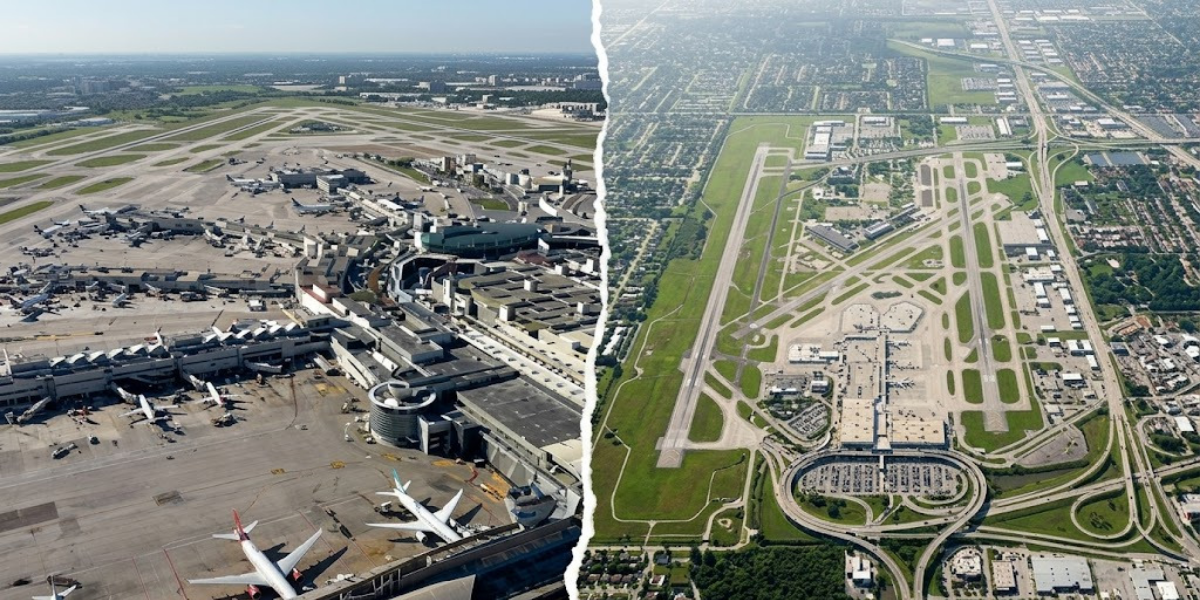
Miami vs Fort Lauderdale Airport: Which Is Better for Your Flight?
Planning a trip to South Florida? One of the first...

Can You Cancel One Passenger on a Flight Reservation?
Short answer: Yes, usually. You can cancel one passenger without...

2027 US Event Travel Calendar: Dates, Cities & When to Book Flights
Planning to see a big US event in 2027? This...


About Us
Truairfare.com is an online search portal for flights tickets where you can find a variety of accommodations near you or at your preferred location.
Get in Touch
Disclaimer:- We are resellers of travel products and services, including hotels, flight deals, car rentals, vacation packages, and attractions. We are a travel company with an online portal partnered with travel consolidators and third-party travel providers. We are not directly or indirectly associated with any airline, hotel, resort, or accommodation. All prices quoted through us include all taxes and fees. The hotel search engine used is a third-party tool from Travelpayouts, which is simply used to provide information; we are not associated with any company, accommodation, or property available on it.
