
 844 744 6348
Which Airport is the Busiest in the United States? (2026 Aviation Data)
June 18, 2026
Hartsfield-Jackson Atlanta International Airport (ATL) is officially the busiest airport in the United States, handling over 104.7 million passengers annually. Chicago O’Hare (ORD) ranks first for the most daily flights, and Denver International (DEN) is the largest by physical size.
When analyzing US aviation hubs, “busy” is defined by three distinct metrics: total passenger volume, daily aircraft movements (takeoffs and landings), and massive physical footprints required to manage modern airline logistics. Understanding these operational patterns is highly beneficial when you are trying to source cheap domestic flights USA, because high-volume hubs naturally invite intense airline competition and lower base fares.
Jump to a section:
Top 10 US Airports by Passenger Volume
1. Hartsfield-Jackson Atlanta International Airport (ATL)
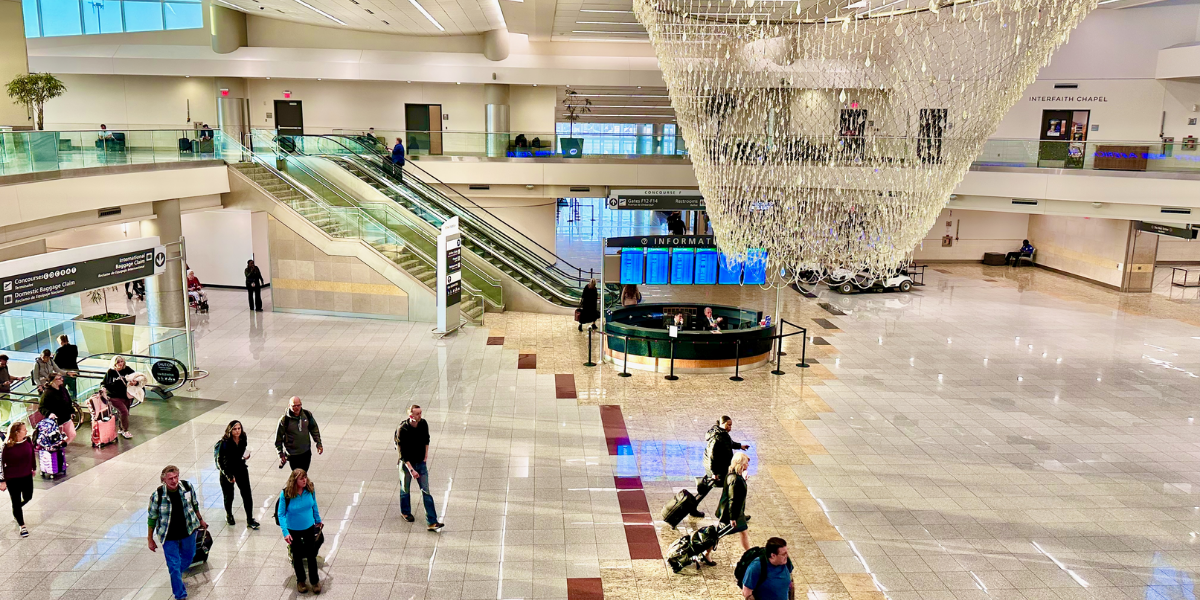
Passenger Volume: 104.7 million annually.
Atlanta is the undisputed king of passenger volume, driven almost entirely by Delta Air Lines’ massive hub-and-spoke model. Because geographically ATL sits within a two-hour flight of 80% of the US population, it is the ultimate transfer point. ATL utilizes a highly efficient parallel concourse system (T, A, B, C, D, E, and F) connected by the underground “Plane Train.”
Transit Warning: If you are booking flights to Atlanta or navigating a layover, beware of the security lines at the main Domestic Terminal on Monday mornings. Never book a connection under 60 minutes.
2. Dallas/Fort Worth International Airport (DFW)
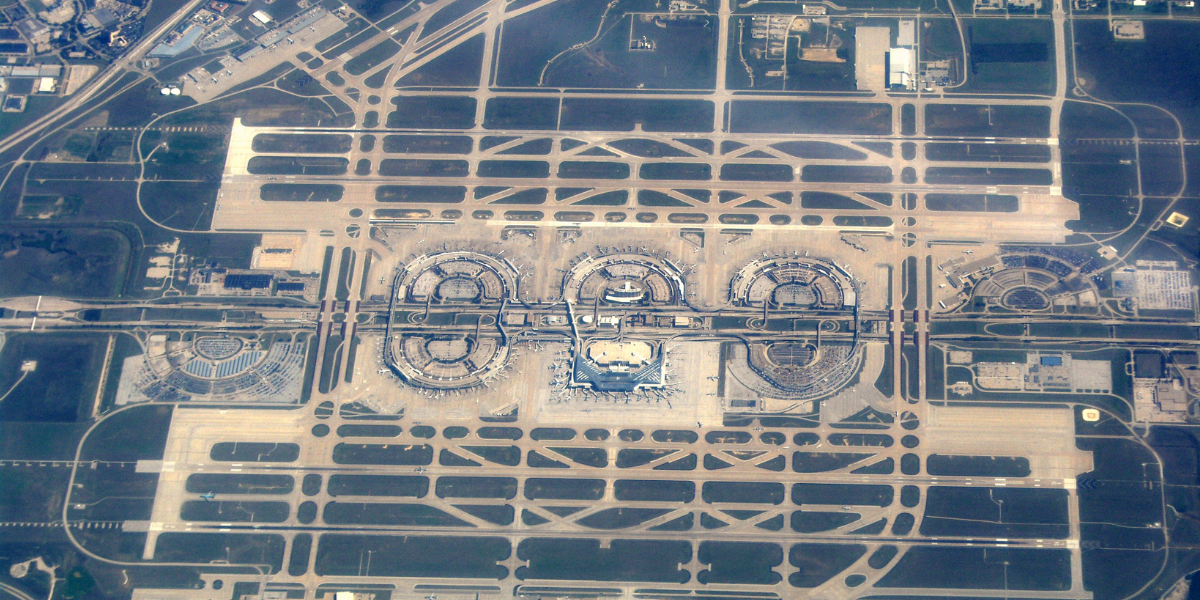
Passenger Volume: 99 million annually.
DFW functions as the primary fortress hub for American Airlines, connecting the East Coast to the West Coast seamlessly. The airport is uniquely designed with five massive, semi-circular terminals (A, B, C, D, and E). Because of its shape, it is fantastic for local travelers dropping off bags right at their gate, but it creates a massive geographical footprint for connecting passengers.
Transit Warning: Travelers securing flights to Dallas or broader flights to Texas must use the high-speed Skylink train inside the secure zone to change terminals. Walking between terminals is physically exhausting.
3. Denver International Airport (DEN)
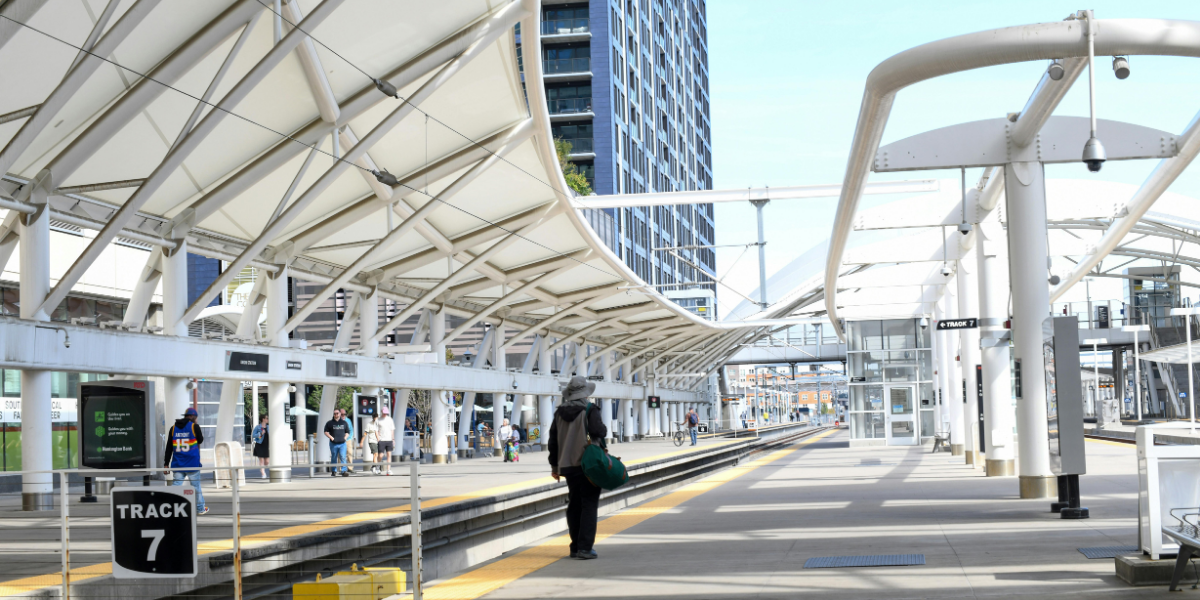
Passenger Volume: 92 million annually.
Denver’s unique geographic location makes it a logical stopping point for mid-continent journeys, serving as a major base for United, Southwest, and Frontier. Known for its iconic tent-like roof, DEN operates out of a single main terminal building (Jeppesen Terminal) that funnels all passengers onto an underground train to reach Concourses A, B, and C.
Transit Warning: If you are securing flights to Denver, the high passenger volume means security lines can scale up rapidly during ski season. Always buffer your layovers here.
4. Chicago O’Hare International Airport (ORD)

Passenger Volume: 83 million annually.
O’Hare is a rare dual-hub, serving as a critical base for both United Airlines and American Airlines. ORD consists of four active passenger terminals (1, 2, 3, and 5). Terminals 1, 2, and 3 are connected airside, while Terminal 5 (International) requires taking the Airport Transit System (ATS) train.
Transit Warning: Whether you are taking flights to Chicago or transferring, winter weather is the biggest threat here. When snow impacts the Midwest, ORD’s massive flight schedule compresses, leading to cascading delays.
5. Los Angeles International Airport (LAX)
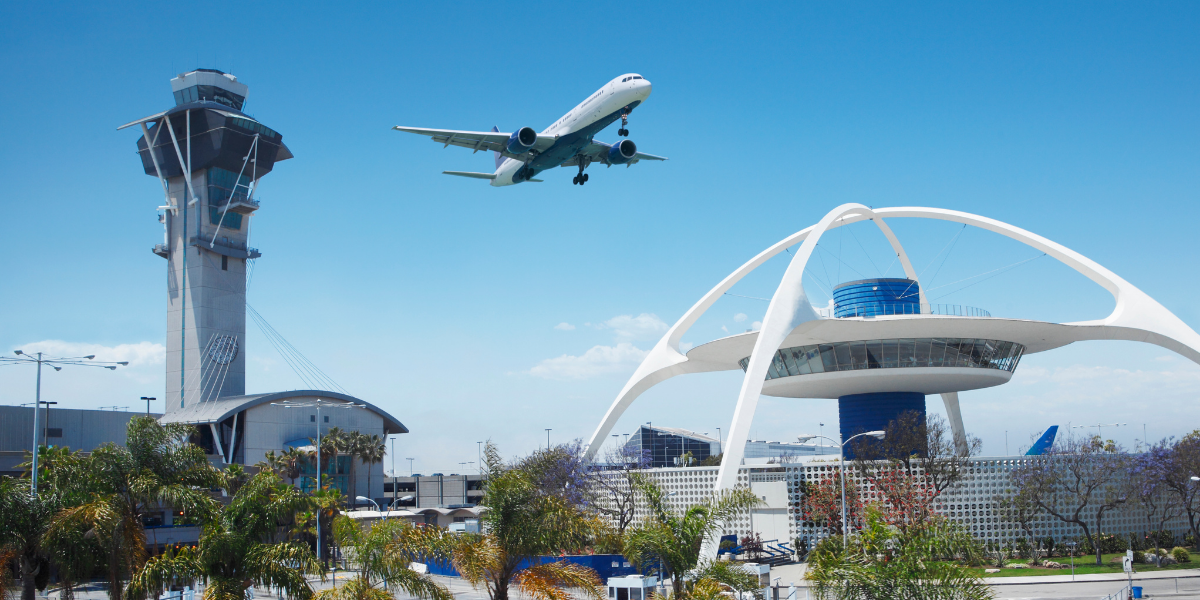
Passenger Volume: 88 million annually.
LAX is the premier gateway for Pacific Rim travel. LAX utilizes a U-shaped layout spanning nine distinct terminals. Unlike fortress hubs, LAX is highly fragmented; no single airline dominates, meaning you might have to switch terminals entirely to catch a partner flight.
Transit Warning: The infamous horseshoe traffic loop outside the terminals can add 30 minutes to your arrival time. Always use the airside connectors to change terminals so you don’t have to re-clear TSA when booking flights to Los Angeles.
6. John F. Kennedy International Airport (JFK)
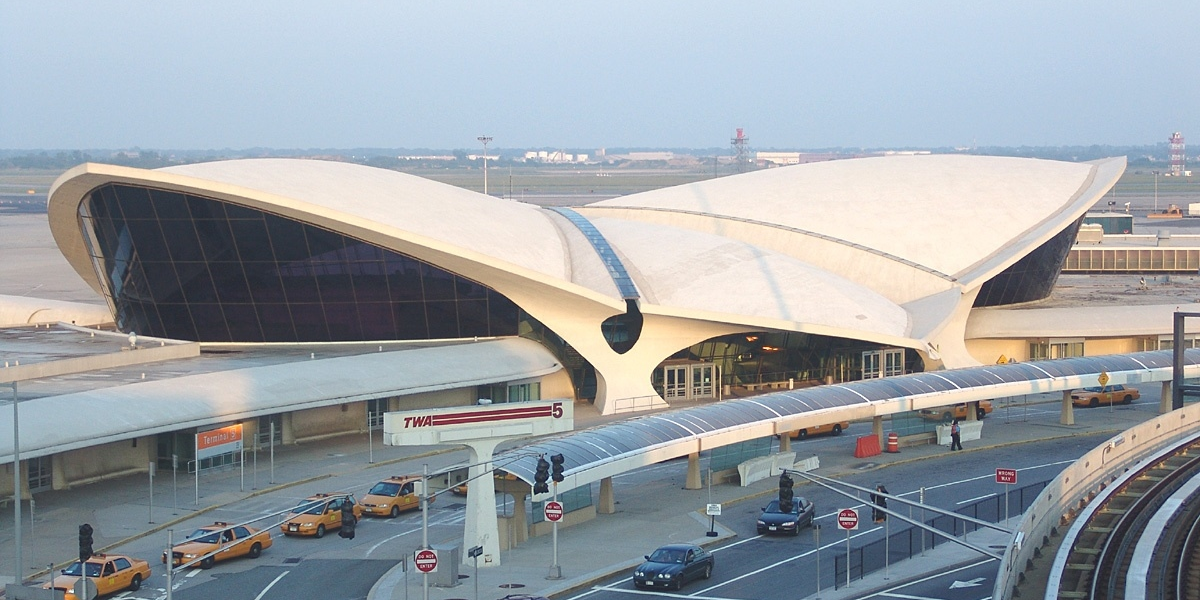
Passenger Volume: 62.5 million annually.
JFK stands as the premier international destination in the US. It manages a massive portion of transatlantic premium travel and operates a complex ring of five active passenger terminals (1, 4, 5, 7, and 8) connected by the AirTrain system.
Transit Warning: Be aware that the terminals are largely independent. If you have an interline connection, you must exit security, take the AirTrain, and re-clear TSA when arriving on flights to New York.
7. Orlando International Airport (MCO)
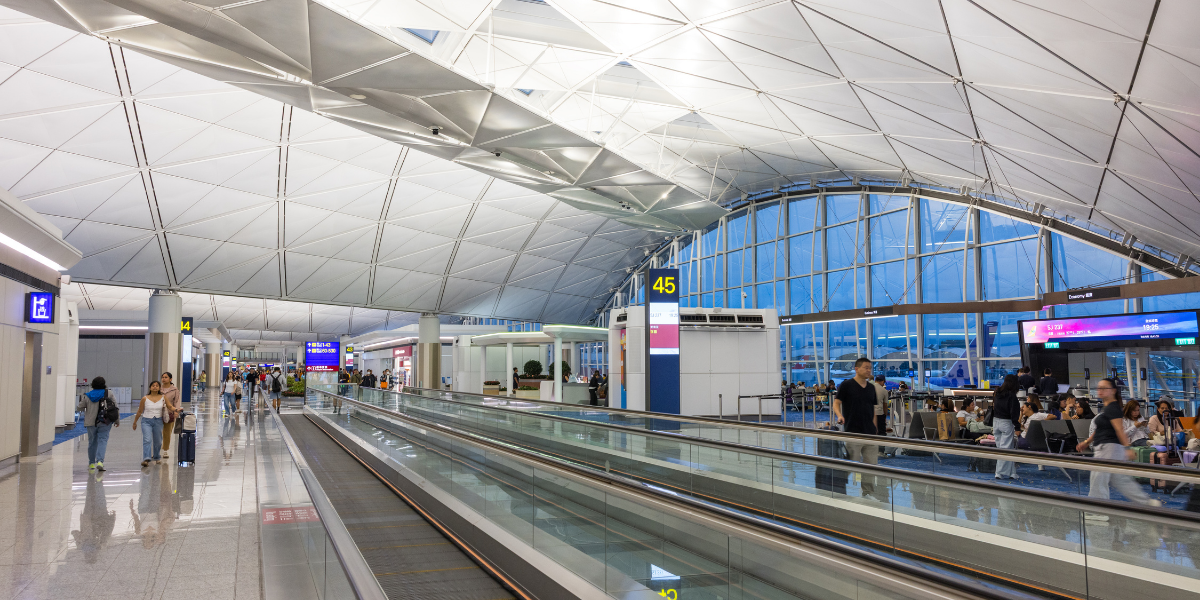
Passenger Volume: 57.7 million annually.
MCO is heavily driven by family vacation and theme park leisure travel. The airport utilizes a hub-and-spoke design with a main terminal and distinct airside concourses accessed via automated people movers.
Transit Warning: Leisure traffic creates distinct security dynamics. Families traveling with strollers slow down the TSA checkpoints significantly. If you are taking flights to Florida via MCO, arrive a full three hours early on weekends.
8. Harry Reid International Airport (LAS)
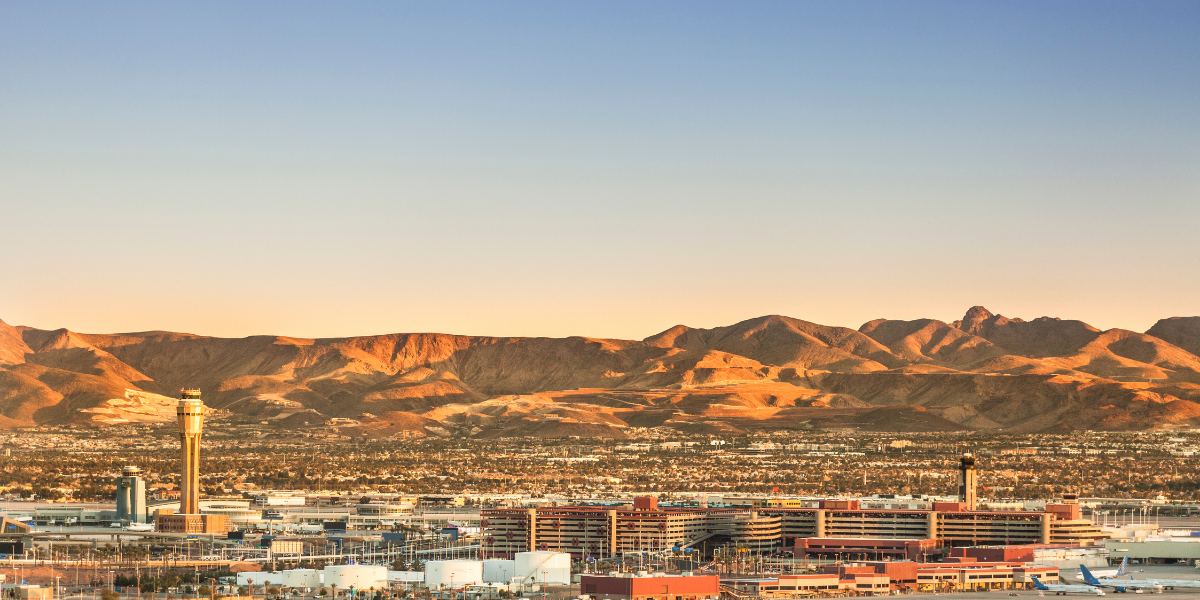
Passenger Volume: 57.6 million annually.
The Las Vegas hub sits right on the edge of the famous Strip and operates out of Terminal 1 and Terminal 3, connected by tram systems.
Transit Warning: The sheer volume of travelers heading home on Sunday mornings creates massive security bottlenecks. Monitor your departures closely when booking flights to Las Vegas.
9. Charlotte Douglas International Airport (CLT)
Passenger Volume: 53.4 million annually.
Charlotte operates as a highly efficient, single-terminal fortress hub for American Airlines, managing a huge volume of East Coast and regional transfers.
Transit Warning: Because of its heavy reliance on regional jets, walking times can be deceptively long. CLT does not have an internal transit train between concourses.
10. Miami International Airport (MIA)
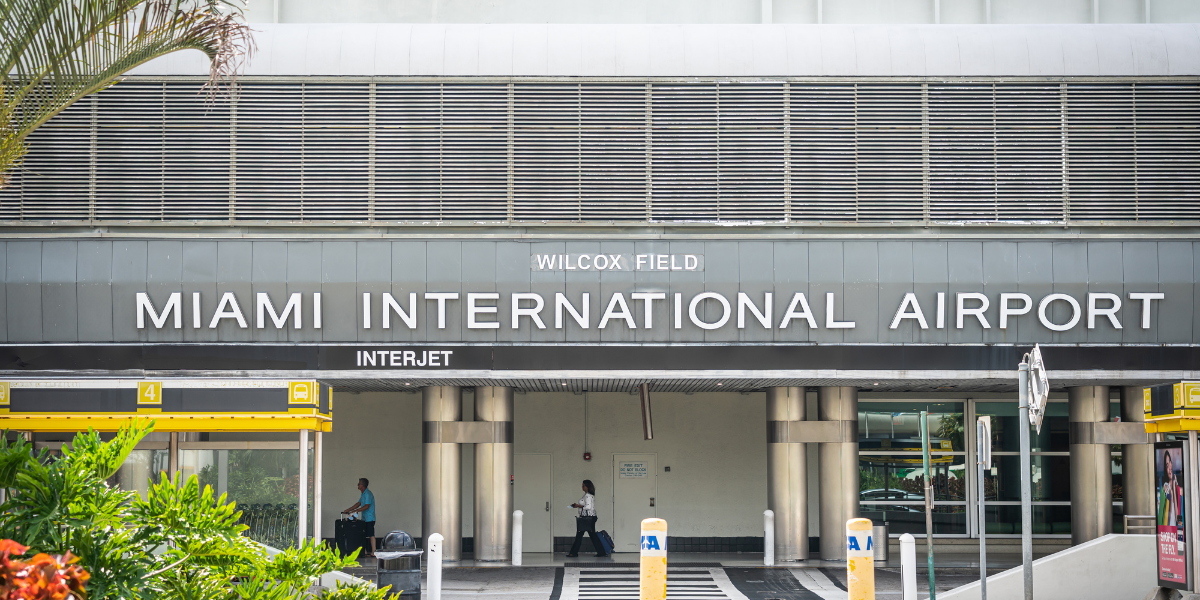
Passenger Volume: 52.3 million annually.
Miami is the undisputed main connection terminal for Latin America and the Caribbean. MIA is structured in a U-shape, divided into the North, Central, and South Terminals.
Transit Warning: If you are utilizing flights to Miami as a connection point from South America, the customs lines can be severe. Global Entry is highly recommended here.
Busiest US Airports by Daily Flights (The Layover Hubs)
While Atlanta sees the most people, passenger volume does not always tell the whole story regarding aircraft movements. If you are connecting through a US major airport, you are likely passing through one of these high-frequency spaces where plane departures are tightly orchestrated.
These airports operate as massive logistical sorting engines. They rely on complex runway configurations to handle simultaneous takeoffs and landings, ensuring thousands of connecting passengers make their flights every hour.
- 1. Chicago O’Hare (ORD) — 815 daily flights: O’Hare leads the country in total runway utilization because it operates an astonishing eight active runways. However, its intersecting runway design makes it highly sensitive to winter weather delays.
- 2. Atlanta Hartsfield-Jackson (ATL) — 786 daily flights: Unlike O’Hare, ATL relies on a brilliant five parallel runway setup, making it the most delay-resistant high-volume airport in the country.
- 3. Dallas Fort Worth (DFW) — 762 daily flights: DFW utilizes seven active runways perfectly designed to handle the heavy banks of American Airlines connections flowing from east to west.
- 4. Denver International (DEN) — 736 daily flights: Managing significant mountain-west routing, DEN features six non-intersecting runways spaced far apart to handle high-altitude snowstorms.
- 5. Charlotte Douglas (CLT) — 671 daily flights: Operates one of the most highly synchronized daily flight schedules in the world for American Airlines regional routes.
- 6. Los Angeles International (LAX) — 554 daily flights: LAX balances domestic routes with heavy, widebody international aircraft.
- 7. George Bush Intercontinental (IAH) — 504 daily flights: Operating five simultaneous runways as a critical base for Latin American connections.
- 8. Miami International (MIA) — 497 daily flights: Manages high-density regional jet traffic alongside massive international routes.
- 9. Phoenix Sky Harbor (PHX) — 481 daily flights: Offers reliable desert tracking for travelers scheduling flights to Phoenix, rarely suffering from weather-related runway closures.
- 10. Newark Liberty International (EWR) — 451 daily flights: Offering a major alternative terminal route for those mapping flights to New Jersey or New York City.
The Biggest US Airports by Physical Size
Physical size drastically impacts your travel experience. The largest US airports require vast tracts of land not just for passenger terminals, but to buffer the surrounding cities from aircraft noise and to provide room for future runway expansions.
- 1. Denver International Airport (DEN): The biggest airport in the United States by a wide margin. Spanning 52.4 square miles (33,531 acres), DEN is larger than the cities of San Francisco, Boston, and Miami combined.
- 2. Dallas Fort Worth (DFW): Occupies 26.9 square miles of land, giving it a larger landmass than the entire island of Manhattan.
- 3. Orlando International (MCO): Follows at 20.8 square miles. A massive portion of its land footprint is permanently designated as protected Florida wetlands.
- 4. Washington Dulles International Airport (IAD): Occupying 20 square miles (13,000 acres) in Northern Virginia, this expansive site was designed in the 1960s with significant room for long-term growth.
- 5. George Bush Intercontinental (IAH): Uses its 15.6 square miles in the Texas Piney Woods to balance massive air cargo facilities and passenger terminals seamlessly.
Which US Airport Has the Most Airlines?
If you are looking for international variety or hoping to catch a budget carrier, the airport with the most individual airlines is where you will find the best competitive pricing.
- John F. Kennedy (JFK): Hosts over 90 airlines across its complex terminal system.
- Miami International Airport (MIA): Hosts over 80 airlines, serving as the primary gateway to South America and the Caribbean.
Smart Routing for Secondary Regions (How to Bypass the Mega-Hubs)
If you want to avoid the congestion of major mega-hubs entirely, booking alternative regional paths is a smart strategy. Secondary airports often provide faster security lines, easier baggage claims, and less stressful connections.
- West Coast & Mountain Escapes: Look for routes into San Diego, San Francisco, or San Jose for easier arrivals. Traveling to Portland or exploring broader regional hubs in Oregon offers excellent connectivity without the massive crowds.
- Midwest & Industrial Centers: Consider booking trips to Detroit, Indianapolis, or St. Louis to bypass the biggest crowds. Flying into Pittsburgh, Cleveland, or general destinations across Ohio often results in much faster terminal navigation.
- Southern & East Coast Corridors: Choose Tampa, Sarasota, or Fort Lauderdale for a more relaxed start to your vacation than navigating Miami or Orlando. Checking connections into Virginia or Maryland provides excellent proximity to the nation’s capital without dealing with the heavy constraints of the larger Northeast transit systems.
Ready to bypass the mega-hubs?
Let TruAirfare build your itinerary. We monitor the connections, route you through the most reliable hubs, and handle the headaches if things go wrong.
Compare Flights with TruAirfare →
Prefer to book by phone? Call TruAirfare 24/7 at (844) 744-6348
CALL US TOLL-FREE to get the best unpublished rate
Submit a request

2027 US Event Travel Calendar: Dates, Cities & When to Book Flights
Planning to see a big US event in 2027? This...
Do You Have to Go Through Security Again for a Connecting Flight?
The short answer is usually no for domestic flights, but...

Do I Need a Visa for a Layover? Transit Visa Rules Explained
Whether you need a visa for a layover depends on...
How to Add TSA PreCheck to American Airlines: Step-by-Step Guide
Getting approved for TSA PreCheck is a huge relief for...

Do You Need a REAL ID to Fly Domestically in 2026?
If you've booked a flight recently and someone mentioned "REAL...



About Us
Truairfare.com is an online search portal for flights tickets where you can find a variety of accommodations near you or at your preferred location.
Get in Touch
Disclaimer:- We are resellers of travel products and services, including hotels, flight deals, car rentals, vacation packages, and attractions. We are a travel company with an online portal partnered with travel consolidators and third-party travel providers. We are not directly or indirectly associated with any airline, hotel, resort, or accommodation. All prices quoted through us include all taxes and fees. The hotel search engine used is a third-party tool from Travelpayouts, which is simply used to provide information; we are not associated with any company, accommodation, or property available on it.
