
 844 744 6348

26 Tips for Your First Overseas Trip (That Actually Matter in 2026)
June 25, 2025
Your first overseas trip is one of those experiences you remember for the rest of your life. The excitement of landing somewhere completely new. The moment you step outside the airport and realize everything the signs, the smells, the sounds is different from home.
But if you go in unprepared, that excitement turns into stress fast. Forgotten documents, wrong luggage sizes, roaming charges, currency confusion these are the things that derail first-time international travelers every single day.
This guide covers 26 tips that genuinely matter. Not generic advice padded out to fill a list real, specific things that make the difference between a trip that goes smoothly and one that does not.
Before You Book Anything
1. Book Your Flight at Least 2–3 Months Out
The single most impactful thing you can do for your budget is book early. For most international routes, fares are lowest in the 8–12 week window before departure. Book inside that window and you get good availability and competitive prices. Book later and you pay a premium.
For transatlantic flights to Europe, 10–14 weeks out is the sweet spot. For Asia, aim for 10–16 weeks. For the Caribbean and Mexico, 6–10 weeks is usually enough.
One of the most common mistakes first-time travelers make is thinking last-minute deals are everywhere. They are not. As we explain in our guide to hidden airline fees and fare pricing, prices typically spike sharply in the 7–14 days before any departure. Book early, lock in your fare, and stop watching the price fluctuate.
2. Be Flexible on Your Exact Dates
If you have a two-week window instead of fixed dates, use it. Shifting your departure by one or two days can save $100–$300 on international fares. Tuesdays and Wednesdays are consistently the cheapest days to fly on most international routes. Sunday departures are almost always the most expensive.
Use the Google Flights price calendar to view a full month of fares at once. Pick the green dates, not the red ones.
3. Always Compare Multiple Airports
Many first-time travelers search only for the closest airport to their home. This is almost always a mistake.
For New York travelers: JFK, LGA, and EWR all serve different airlines at different price points. For London arrivals: Heathrow (LHR), Gatwick (LGW), and Stansted (STN) are all served from the US. The cheapest fare is not always at the most obvious airport.
Before you finalize any booking, check our complete US states airport codes guide it covers every major US airport, secondary options, and which ones consistently offer cheaper fares for the same destination city. Understanding which airport codes serve your metro area is one of the most practical ways to reduce the cost of your trip before it even starts.
Documents and Admin
4. Check Your Passport Validity Right Now
Do not wait until two weeks before departure to check this. Most countries require your passport to be valid for at least six months beyond your return date. If it expires in fewer than eight months, renew it now processing times can run 6–10 weeks for standard service.
Check the entry requirements for your specific destination on the US State Department website at travel.state.gov. Requirements vary significantly by country.
5. Understand Whether You Need a Visa
For US passport holders, many popular destinations most of Europe, Mexico, Japan, Canada, and the Caribbean do not require a visa for short tourist stays. Others require a pre-approved electronic travel authorization (ETA) or a full visa application that can take weeks.
Check IATA Travel Centre or your destination’s official embassy website for the most accurate, current requirements. Do not rely on travel forums for this visa rules change.
6. Make Physical and Digital Copies of Everything
Before you leave, make copies of your passport photo page, your visa or entry authorization, your travel insurance policy, your flight itinerary and confirmation numbers, your accommodation bookings, and your bank’s international support number.
Store one set of physical copies in a separate bag from your originals. Upload digital copies to a secure cloud folder you can access from any device, even if your phone is lost or stolen.
7. Register With Your Embassy
The US State Department’s Smart Traveler Enrollment Program (STEP) is free and takes five minutes at step.state.gov. Once registered, your embassy can contact you in an emergency, share safety alerts for your destination, and assist if you need help abroad. Most first-time travelers have never heard of this. It takes five minutes and is worth doing on every international trip.
Money and Banking
8. Tell Your Bank Before You Go
Many banks automatically block international transactions as fraud protection. If you do not notify them before your trip, your card may be declined at the worst possible moment. Call your bank or log into your banking app and set a travel notification for every card you plan to bring.
9. Know Your ATM and Currency Strategy
For most international destinations, the cheapest way to access local currency is to withdraw cash from a local ATM on arrival rather than exchanging money at an airport currency counter. Airport exchange desks charge high fees and poor exchange rates.
Always choose to pay in the local currency at ATMs and card terminals not in US dollars. The dynamic currency conversion offered in dollars is almost always a worse rate.
10. Have a Backup Payment Method
Never travel internationally with only one card. Carry one Visa and one Mastercard if possible acceptance varies by country and merchant. Keep them in different locations, not in the same wallet.
“The financial setup for an international trip takes 30 minutes to do right. Skip it and you can end up stranded at a foreign ATM at midnight. Get it right and you never think about money once.”
Packing
11. Pack for One Week, Whatever the Trip Length
Most first-time international travelers severely overpack. If you are going for two or three weeks, you need one week of clothes and access to laundry not three weeks of luggage. For a two-week trip, one carry-on sized bag and one personal item is entirely realistic if you plan carefully.
Understanding what your airline allows you to bring is important before you pack a single item. Baggage rules vary significantly between carriers and fare types and getting it wrong is expensive. Our guide on hidden airline fees covers exactly what each major airline charges for bags and how to avoid paying more than you need to.
12. Use Packing Cubes
Packing cubes compress clothing, keep your bag organized, and make security unpacking fast. A set of four cubes for $25–$30 makes a real practical difference on any trip longer than a few days. Assign one cube per category tops, bottoms, underwear and socks, layers.
13. Know the 3-1-1 Liquids Rule
Liquids in carry-on bags must follow the 3-1-1 rule on US departures: containers must be 3.4 oz (100ml) or under, all fitting in one clear quart-sized bag, one bag per person. Never put your passport, medications, electronics, or anything you cannot afford to lose in a checked bag.
14. Pack a Basic First Aid Kit
A small pouch with pain relievers, antihistamine, anti-diarrhea medication, bandages, antiseptic wipes, and any prescription medications you take covers 95% of travel health situations. Bring any prescription in its original labeled container with extra supply for delays.
The Flight Itself
15. Manage Jet Lag Before It Starts
In the two to three days before departure, start shifting your sleep time toward your destination’s time zone. On the plane, avoid alcohol, drink water consistently, and set your watch to destination time the moment you board. On arrival, stay awake until local bedtime no matter how tired you are. This single step resets your body clock faster than anything else.
16. Know What Your Fare Includes Before You Board
This is one of the most important things to sort out before your departure day. Basic economy fares on most airlines do not include seat selection, carry-on bags, or changes — and the penalties for showing up unprepared at the gate are steep.
Understanding exactly what your ticket type allows before you pack is essential. Our guide on United Airlines basic economy carry-on rules explains the specific rules for one of the most commonly booked fare types and the same principles apply across most carriers. Know what you have before you arrive at the airport.
17. Charge Everything the Night Before
Dead phone on arrival at an unfamiliar airport with no local SIM card yet is one of the most disorienting ways to start an international trip. Charge your phone, your backup battery bank, your headphones, and anything else battery-powered the night before you leave. Not the morning of the night before.
At Your Destination
18. Sort Your Phone Plan Before You Land
There are three realistic options for international phone access. An international day pass from your carrier ($10/day from most US carriers) is convenient but adds up on long trips. A local SIM card bought on arrival is cheapest for stays over a week. T-Mobile includes unlimited data (at slow speeds) in 200+ countries on most of its plans.
Figure out which option fits your destination and budget before you land. Arriving without a plan and trying to sort it out at a foreign airport while jet-lagged is expensive and stressful.
19. Download Offline Maps Before You Leave
Google Maps allows you to download offline maps for any city before you travel. Do this on Wi-Fi at home. An offline map means you can navigate without using data useful in areas with poor signal or if you run out of data unexpectedly. Download the map for your destination city and the surrounding area. It takes five minutes.
20. Know the Local Emergency Numbers
Every country has different emergency service numbers. In most of Europe, 112 works for police, fire, and ambulance. In Australia it is 000. In Japan it is 110 for police and 119 for ambulance. The US 911 does not work overseas.
Before you leave, look up the emergency numbers for your destination and save them in your phone. Also save the address and phone number of the nearest US embassy or consulate at usembassy.gov.
At the Airport
21. Understand Your Passenger Rights
Knowing your rights when things go wrong at the airport is something most travelers only discover after they need it. Delayed flights, cancellations, and denied boarding all come with specific compensation rules that airlines are required to follow but rarely volunteer to tell you about.
Before your trip, read our guide to delayed flight compensation and US passenger rights. It covers exactly what you are entitled to, how to claim it, and what to do at the airport if your flight is disrupted. Having this knowledge before you travel means you are never left standing at a gate counter not knowing what to ask for.
22. Check In Online and Have Your Boarding Pass Ready
Check in online 24 hours before departure. Download your boarding pass to Apple Wallet or Google Pay so you have it accessible even without a signal. If you are flying a budget carrier, checking in at the airport counter instead of online can trigger a $25 agent check-in fee — an avoidable cost that surprises many first-time travelers.
Culture, Safety and Practical Sense
23. Research Basic Cultural Norms for Your Destination
A basic awareness of local norms prevents the most common and easily avoidable mistakes. Things worth checking before you go: appropriate dress codes for religious sites, tipping customs (tipping is considered rude in Japan, standard in the US, and variable everywhere in between), gestures that are offensive in some cultures, and photography rules at specific sites.
A 15-minute read on your destination’s cultural etiquette is not excessive preparation it is respectful travel.
24. Keep Your Valuables Simple and Discreet
The most common travel theft worldwide is opportunistic. Use a front pocket or inner jacket pocket for your phone and cash. Consider a slim travel wallet that sits against your body. In high-pickpocket areas, keep your phone in your hand only when actively using it.
Leave expensive jewelry, extra credit cards you do not need, and your original passport copy locked in your accommodation safe when possible. Carry a photocopy of your passport instead of the original when out exploring.
25. Eat Like a Local, Not Like a Tourist
The restaurants immediately surrounding major tourist attractions charge two to three times more than places a five-minute walk away. The most memorable meals on any overseas trip almost always happen at small, locally-run places found by walking around rather than following a tourist map. Ask hotel staff or locals where they actually eat.
Mindset
26. Things Will Go Wrong And That Is Fine
On almost every international trip, something does not go according to plan. A delayed flight, a booking confusion, rain for three straight days. The travelers who enjoy their trips most are not the ones who experienced no problems they are the ones who expected imperfection and stayed flexible when it arrived.
A missed connection that forces an unexpected overnight somewhere new often becomes a highlight of the trip. Hold the itinerary loosely. The point of travel is not to execute a plan — it is to experience somewhere different.
The Most Important Step Before You Go
Your flight is the foundation of the entire trip. The right fare, on the right dates, with the right flexibility it matters more than almost any other single decision you make.
Understanding how airline fares actually work before you book — what is included, what hidden costs to watch for, and when to buy is the difference between starting your first overseas trip with money to spend and arriving already over budget.
“At TruAirfare, we help first-time international travelers find fares that work for their budget and their plans. Whether you need a flexible ticket, the best routing, or just a second opinion before you book — call us at +844-744-6348. One call is all it takes.”
Frequently Asked Questions
Q: How far in advance should I book my first international flight?
A: For most international destinations, 8–12 weeks before departure offers the best combination of price and availability. For popular summer routes to Europe or Asia, 12–16 weeks is safer. For the Caribbean and Mexico, 6–10 weeks is usually sufficient.
Q: Do I need travel insurance for an overseas trip?
A: Yes. Medical costs abroad especially in countries without healthcare agreements with the US can be extremely high. Travel insurance that includes medical evacuation coverage is particularly important. It is not expensive relative to what it protects you from.
Q: What is the best way to carry money internationally?
A: A no-foreign-fee debit card for ATM withdrawals, one travel-friendly credit card with no foreign transaction fees, and a small amount of local cash on arrival covers almost every situation. Avoid airport currency exchanges the rates are always poor.
Q: What should I do if my passport is lost or stolen abroad?
A: Report it to local police and get a police report. Then contact the nearest US embassy or consulate find addresses at usembassy.gov. Having a photocopy of your passport stored separately from the original significantly speeds up the replacement process.
Related Reading on TruAirfare
CALL US TOLL-FREE to get the best unpublished rate
Submit a request

Can You Carry a Guitar on a Plane? TSA Rules
If you are wondering, "can you carry guitar on plane,"...

What Is a Redeye Flight? Meaning, Pros & Tips
If you are planning an upcoming trip across the country,...
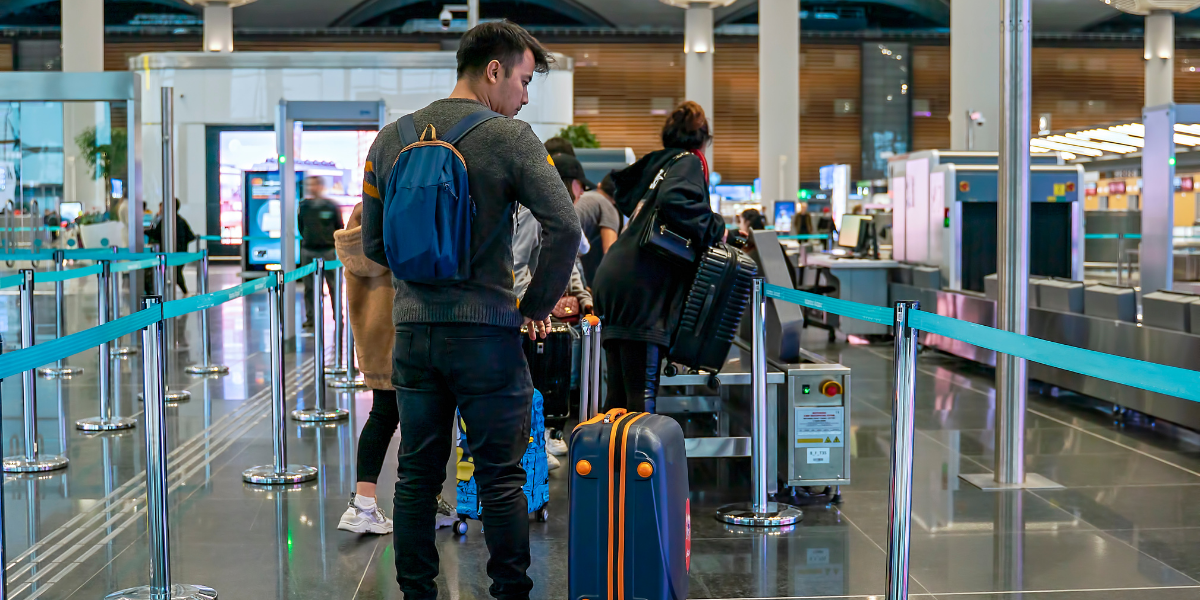
Can You Leave the Airport During a Layover? Rules & Tips
A six hour layover can feel like wasted time when...

Largest Music Festivals in the US: Dates, Tickets & Travel Guide
Music festivals are no longer just weekend concerts where you...

Closest Beaches to Dallas: Drive Times, Maps & Best Trips
Living in Dallas does not mean you have to skip...



About Us
Truairfare.com is an online search portal for flights tickets where you can find a variety of accommodations near you or at your preferred location.
Get in Touch
Disclaimer:- We are resellers of travel products and services, including hotels, flight deals, car rentals, vacation packages, and attractions. We are a travel company with an online portal partnered with travel consolidators and third-party travel providers. We are not directly or indirectly associated with any airline, hotel, resort, or accommodation. All prices quoted through us include all taxes and fees. The hotel search engine used is a third-party tool from Travelpayouts, which is simply used to provide information; we are not associated with any company, accommodation, or property available on it.
