
 844 744 6348
Carry-On vs Personal Item: What’s the Difference?
September 15, 2026
Before every flight, many travelers face the exact same dilemma: Should I bring a carry-on bag, or will my personal item be enough? Choosing the wrong option can quickly lead to extra gate-check fees, stressful repacking in the boarding line, or lost time at your destination.
Understanding the difference between a carry on vs personal item is one of the easiest ways to save money, move through airport security faster, and travel stress-free. Every airline enforces its own set of airline baggage policies, which means knowing what goes where is essential before you head to the gate.
Jump to a section:
Carry-On vs Personal Item: The Quick Difference
The primary difference comes down to storage location and size.
| Feature | Carry-On | Personal Item |
|---|---|---|
| Storage | Overhead bin | Under seat |
| Size | Larger | Smaller |
| Purpose | Main cabin luggage | Essentials |
| Examples | Roller suitcase | Backpack, purse, laptop bag |
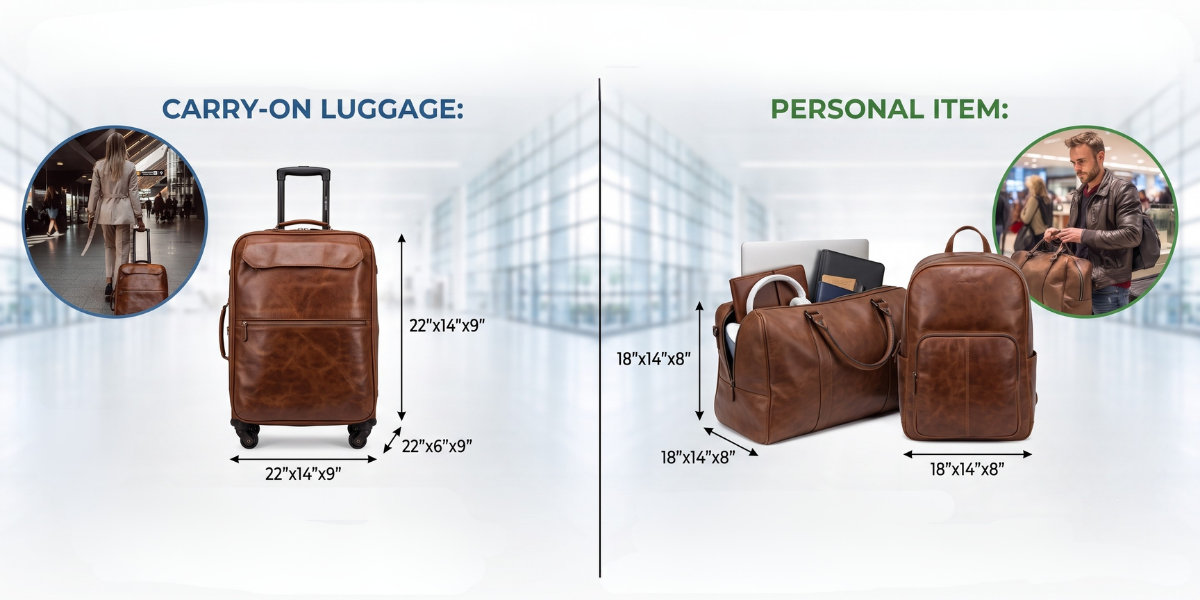
- Storage Location: A carry-on bag is designed to fit inside the overhead storage bin above your seat. A personal item must fit completely under the seat directly in front of you.
- Bag Size: Carry-on bags are noticeably larger, usually measuring around 22 inches tall. Personal items are compact and typically measure under 18 inches in length.
- Purpose and Use: Carry-on bags hold your main trip wardrobe, extra pairs of shoes, and bulky travel gear. Personal items hold your in-flight necessities like your wallet, phone, tablet, headphones, and medication.
- Common Bag Styles: Typical carry-on bags include small rolling suitcases, structured duffel bags, and large travel backpacks. Common personal items include everyday school or work backpacks, tote bags, laptop cases, and purses.
In short, your carry-on is your primary cabin luggage, while your personal item serves as your in-flight survival kit.
What Is a Carry-On Bag?
A carry-on bag is a piece of luggage that you carry directly into the airplane cabin and stow away in the overhead compartment. It serves as your main suitcase when you want to skip the baggage claim carousel and avoid paying checked bag fees.
Most travelers choose a hard-shell roller suitcase, a sturdy duffel bag, or an overhead-sized travel backpack. Carry-on bags carry the bulk of your clothing, extra footwear, and liquids that comply with airport security rules. While traditional airlines generally include a standard carry-on with a regular economy ticket, basic economy fares and ultra-budget carriers often charge extra fees to use the overhead bins.
What Is a Personal Item?
A personal item is a compact piece of luggage that slides entirely underneath the passenger seat in front of you. It cannot block the aisle or stick out into your foot space during taxi, takeoff, or landing.
Standard examples of personal items include:
• Everyday daypacks and school backpacks
• Laptop bags and professional briefcases
• Large purses and handbags
• Compact canvas totes and diaper bags
Passengers rely on their personal item to store valuable and sensitive possessions. It is the best place to keep your passport, boarding passes, wallet, laptop, prescriptions, and fragile electronics. If you need quick access to something while seated with your seatbelt fastened, it belongs in your personal item.
Carry-On vs Personal Item Size Limits
Because there is no universal airline size limit, dimensions vary across carriers. However, major domestic airlines share fairly consistent standards for carry-on luggage rules.
For a standard carry-on bag, the industry norm among major full-service carriers is 22 x 14 x 9 inches (56 x 36 x 23 cm), including handles and wheels. Personal item dimensions vary more widely:
| Airline | Carry-On | Personal Item |
|---|---|---|
| American Airlines | 22 x 14 x 9 inches | 18 x 14 x 8 inches |
| United Airlines | 22 x 14 x 9 inches | 17 x 10 x 9 inches |
| Delta Air Lines | 22 x 14 x 9 inches | Does not list rigid dimensions — must fit under the seat |
Can You Bring Both a Carry-On and Personal Item?
Yes, on standard main cabin tickets with major legacy airlines, passengers are routinely permitted to bring one carry-on bag plus one personal item free of charge. You can board with a 22-inch rolling suitcase for the overhead bin and slip your laptop backpack under the seat.
However, key exceptions exist:
- Basic Economy Tickets: Many basic economy fares on carriers like United prohibit overhead carry-on bags entirely, allowing only a single personal item.
- Ultra-Low-Cost Carriers: Airlines such as Spirit, Frontier, and Allegiant charge for any bag placed in the overhead compartment. Only a compact personal item is included with their base ticket price.
- Regional Aircraft: Small commuter planes often have narrow overhead bins. Gate agents may gate-check your carry-on bag for free at the jet bridge, even if your ticket allows one.
Can a Backpack Be a Personal Item?
Yes, a backpack can qualify as a personal item, provided it fits under the seat in front of you and matches your airline’s published dimensions.
A standard daypack or school backpack with a capacity between 15 and 25 liters works well as a personal item. If you pack a 40-liter hiking pack or an expandable travel bag, flight attendants will classify it as a carry-on and require you to place it in the overhead locker.
Carry-On vs Personal Item: Which One Should You Choose?
Choose Only a Personal Item If:
You are taking a quick 1 to 3 day weekend trip. You booked a basic economy or budget airline ticket and want to avoid all baggage fees. You prefer moving swiftly through airports without waiting in lines. You can pack versatile, lightweight clothing.
Choose Carry-On + Personal Item If:
Your trip lasts 4 days or longer. You need multiple pairs of shoes, bulky weather gear, or formal outfits. You are traveling with children and need extra snacks, games, and emergency clothes. You are on a business trip that requires both professional suits and dedicated tech equipment.
How to Pack More Using Only a Personal Item
Traveling with just a single under-seat bag is easier with the right packing techniques:
- Use Compression Packing Cubes: Compression cubes squeeze out trapped air, shrinking clothing volume by up to 40 percent.
- Choose Versatile Outfits: Pack lightweight garments in neutral tones that you can mix, match, and layer easily.
- Wear Your Bulkiest Gear on Board: Wear your heaviest coat, boots, and thick sweaters during your flight rather than packing them inside your bag.
- Downsize Toiletries: Skip heavy bottles and bring travel-sized liquids. Always double-check safety rules on what you can carry, including whether can you bring vitamins on a plane or pack specific supplements.
- Carry Electronics Safely: If you plan to work, remember that spare lithium batteries must remain in the cabin. Review regulations on whether can you take a power bank on a plane so you store portable chargers in your personal item rather than checked luggage.
Common Carry-On and Personal Item Mistakes
Assuming Every Airline Has Identical Limits
Rules differ between airlines, fare classes, and aircraft sizes.
Overstuffing a Soft Backpack
A soft backpack that expands beyond the under-seat space can cause gate agents to force a gate check.
Ignoring Weight Limits
While US domestic airlines rarely weigh cabin bags, many international and European carriers enforce strict weight caps between 15 and 22 pounds.
Packing Prohibited Items
Avoid packing oversized liquids or forbidden tools by reviewing official TSA carry-on rules before boarding.
Carry-On vs Personal Item Rules for Major US Airlines
American Airlines
Standard tickets include one overhead bag and one under-seat item. Review the complete American Airlines baggage policy for specific class allowances.
Delta Air Lines
Delta allows one carry-on and one personal item for all ticket categories, including basic economy on most routes.
United Airlines
Main economy allows both bags, but basic economy tickets limit passengers to a single personal item. Check the United Airlines baggage policy before booking.
Southwest Airlines
Every passenger can bring one personal item and one carry-on bag, alongside two free checked bags. Check details in the Southwest Airlines baggage policy.
JetBlue
Blue Basic ticket holders are permitted one free personal item, but standard carry-on bags are excluded unless specified by route or loyalty tier.
How to Avoid Carry-On Fees
- Review Fare Inclusions Before Buying: A cheaper base fare may end up costing more once overhead bag fees are added at checkout.
- Measure Your Bags Packed: Always measure your luggage fully packed, as bulging pockets often push a bag over limits.
- Learn Gate Check Policies: If overhead bins fill up on a full flight, airlines often offer complimentary gate-checking for carry-on bags at the boarding gate.
- Research Domestic Travel Rules: Stay updated on booking strategies that help you avoid hidden fees on US domestic flights.
Final Verdict: Do You Need a Carry-On or Personal Item?
A personal item is the ultimate choice for budget-conscious minimalists who want fast airport exits and zero baggage fees. A carry-on bag remains the gold standard for travelers taking longer journeys who need extra wardrobe flexibility. Assess your trip duration, confirm your airline fare tier, and pack strategically to enjoy a smooth boarding process.
Frequently Asked Questions
1. What is the difference between a carry-on and personal item?
A carry-on bag is a larger piece of luggage stored in the overhead compartment, while a personal item is a smaller bag that must fit beneath the seat in front of you.
2. Can I bring a carry-on and personal item?
Yes, most standard economy tickets on major airlines allow you to bring both bags. However, basic economy fares and ultra-low-cost carriers often limit travelers to a personal item only.
3. Is a backpack a carry-on or personal item?
It depends entirely on its size. Standard 15 to 25-liter backpacks that fit under the seat count as personal items. Larger hiking and travel bags must go in the overhead bin as carry-ons.
4. Does a purse count as a personal item?
Yes, airlines count purses, totes, and handbags as your single allotted personal item.
5. What size is allowed for a personal item?
While size limits vary across carriers, common dimensions are roughly 18 x 14 x 8 inches or smaller. The bag must fit comfortably beneath the airplane seat.
6. Which is better: carry-on or personal item?
A personal item is best for weekend getaways and saving on discount airline tickets. A carry-on is better for longer trips that require multiple outfits and footwear options.
Ready to Pack and Book?
Compare fares, check the fine print on baggage, and fly with the right bag for your trip.
Compare Flights with TruAirfare →
Prefer to book by phone? Call TruAirfare 24/7 at (844) 744-6348
CALL US TOLL-FREE to get the best unpublished rate
Submit a request

Do I Need a Visa for a Layover? Transit Visa Rules Explained
Whether you need a visa for a layover depends on...
How to Add TSA PreCheck to American Airlines: Step-by-Step Guide
Getting approved for TSA PreCheck is a huge relief for...
Do You Need a REAL ID to Fly Domestically in 2026?
If you've booked a flight recently and someone mentioned "REAL...
Booking Two One-Way Tickets Instead of Round Trip: Is It Better?
When searching for flights, many travelers automatically choose a round-trip...
What Happens If You Miss Your Connecting Flight?
Missing a connecting flight can instantly turn an exciting journey...


About Us
Truairfare.com is an online search portal for flights tickets where you can find a variety of accommodations near you or at your preferred location.
Get in Touch
Disclaimer:- We are resellers of travel products and services, including hotels, flight deals, car rentals, vacation packages, and attractions. We are a travel company with an online portal partnered with travel consolidators and third-party travel providers. We are not directly or indirectly associated with any airline, hotel, resort, or accommodation. All prices quoted through us include all taxes and fees. The hotel search engine used is a third-party tool from Travelpayouts, which is simply used to provide information; we are not associated with any company, accommodation, or property available on it.
