
 844 744 6348
Medicines on a Plane: 2026 TSA Rules & Guidelines
April 1, 2026
Whether you are managing a chronic condition like diabetes or simply need to keep your blood pressure medication handy, the thought of bringing medicines on a plane and having an airport security agent rummaging through your medical supplies is enough to spike anyone’s heart rate. Between the strict liquid rules and the high-tech scanners, the fear that a vital prescription might be confiscated is real.
As we move through 2026, the Transportation Security Administration (TSA) has updated several protocols. While new CT scanning technology is making lines move faster, it also means you need to be more precise about how you pack. This guide breaks down the essential TSA medication rules for 2026, ensuring you can get your medicines on a plane without a single “please step aside” from an officer.
1. The Golden Rule: NEVER Check Your Medication

If there is one piece of advice you take from this guide about taking medicines on a plane, let it be this: 100% of your essential medications must stay in your carry-on or personal item.
There are two major reasons for this “carry-on only” rule:
-
Temperature Damage: The cargo hold of an airplane is not climate-controlled like the cabin. Temperatures can drop to sub-freezing levels, which can chemically alter and ruin sensitive drugs like insulin, biologics, or even certain liquid antibiotics.
-
The Risk of Loss: Checked bags are delayed or lost every single day. If your bag ends up in London while you’re in New York, you could face a medical emergency trying to navigate a foreign pharmacy system.
Whether you’re hunting for cheap domestic flights for a weekend getaway or packing for a long vacation, always keep your prescriptions safely stowed under the seat in front of you. This ensures that even if your luggage goes on its own adventure, your health remains in your hands.
2. Pills and Solids: Busted Myths and Pill Organizers
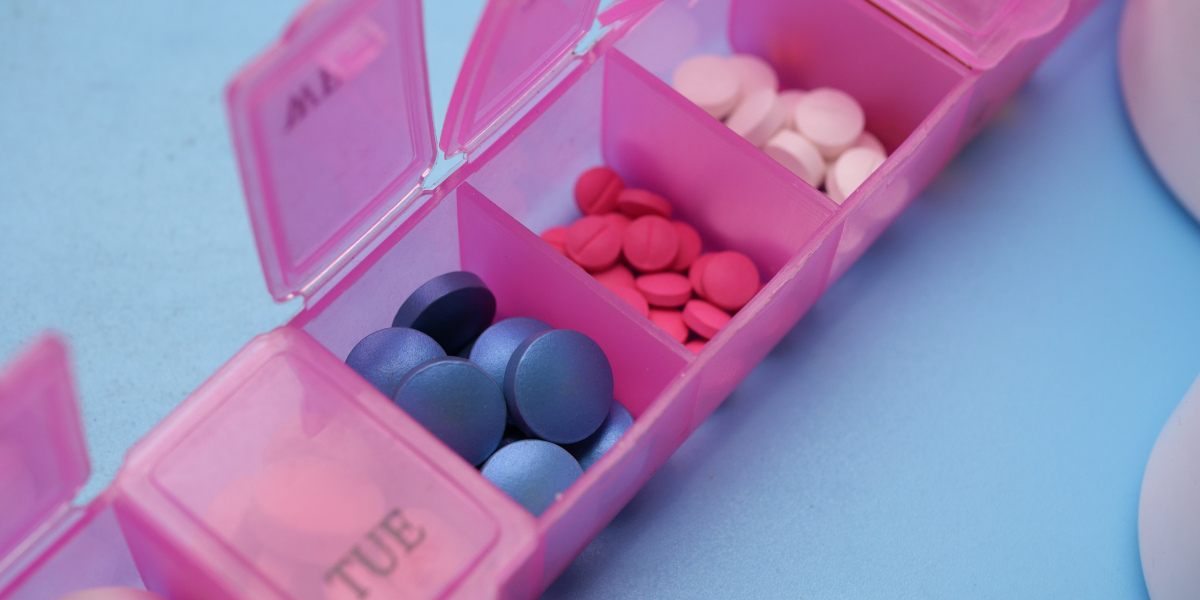
One of the most common questions travelers ask when packing medicines on a plane is: “Do I need to keep my pills in the original pharmacy bottles?”
The Reality for Domestic Flights
For domestic travel within the United States, the TSA does not require your medication to be in its original prescription bottles. You are legally allowed to use daily plastic pill organizers, Ziploc bags, or multi-vitamin containers. This is a huge space-saver for those who take multiple supplements or daily maintenance meds.
The Reality for International Flights
If you are crossing international borders, the rules change drastically. Customs officials in other countries are often much stricter than the TSA. To avoid being detained for “unidentified substances,” it is highly recommended to keep all pills in their original, labeled pharmacy containers when flying internationally.
3. Liquid Medications & The TSA 3.4oz Exemption
Everyone knows the “3-1-1” rule: liquids must be in containers of 3.4 ounces (100ml) or less and fit into a single quart-sized bag. However, if you need to bring liquid medicines on a plane, medically necessary liquids are exempt from this rule.
What Qualifies?
-
Prescription liquid medications (antibiotics, cough syrups).
-
Over-the-counter liquids (saline solution, liquid nutrition like Ensure).
-
Gels and aerosols needed for medical purposes.
-
Contact lens solution (which is considered a medical necessity).
The Catch: You Must Declare Them
You cannot simply leave a 6oz bottle of liquid medicine hidden at the bottom of your bag. If it exceeds the standard limit, you must remove it from your carry-on and declare it to the TSA officer at the beginning of the screening process. Simply say, “I have medically necessary liquids over 3.4 ounces.” They may perform a separate test on the liquid (often by waving a sensor over the open bottle), but they will not take it away if it is for your health.
4. Medical Devices & The Right to a Pat-Down

In 2026, many airports use Advanced Imaging Technology (AIT) or CT scanners. While these are safe for most people, they can be catastrophic for certain medical devices.
Sensitive Electronics
If you use an insulin pump, continuous glucose monitor (CGM), or have a pacemaker, you should avoid putting these devices through the X-ray machine or going through the full-body scanner. High-dose radiation can cause these sensitive electronics to malfunction or fail entirely.
Your Legal Right
You have the legal right to request a manual pat-down and a visual inspection of your devices instead of going through the scanners. Simply inform the agent before you enter the machine. If you are traveling with bulky medical devices like a CPAP machine, booking business class flights can provide the extra under-seat space and priority boarding you need to get settled comfortably without rushing.
5. Refrigerated Meds (Insulin) & Syringes
Many life-saving medications must be kept cold. The TSA understands the necessity of having these refrigerated medicines on a plane, but there is a specific “state of matter” rule you must follow.
-
The Frozen Rule: Ice packs, freezer packs, and gel packs are allowed through security to keep your medication cold. However, they must be frozen solid when you arrive at the checkpoint. If the ice pack is melted, slushy, or has liquid at the bottom, the TSA may treat it as a standard liquid and confiscate it if it’s over 3.4 ounces.
-
Syringes: You are allowed to carry unused syringes in your carry-on, but they must be accompanied by the injectable medication (like insulin or an EpiPen). You should declare these to the officer so they aren’t surprised during the X-ray.
6. Prohibited Items: Marijuana and International Traps
This is where many travelers get into legal trouble. Even though laws are changing, the airport remains a federal zone.
Medical Marijuana
Even if you are flying between two states where medical or recreational marijuana is legal (e.g., California to Colorado), marijuana is still federally illegal. Because the TSA is a federal agency, if an officer finds marijuana in your bag including “medical” gummies or oils they are required by law to call local law enforcement. While the TSA isn’t actively searching for drugs, they won’t ignore them if found.
The Exception: FDA-approved CBD products containing less than 0.3% THC are generally allowed.
International Traps
Before you fly abroad, check your destination’s laws. Common U.S. medications like Adderall (ADHD stimulants) or even certain Vicks inhalers are strictly banned in countries like Japan or the UAE. Carrying these without the correct advance permits can lead to immediate arrest upon arrival. Always check the embassy website of your destination country 30 days before you fly.
7. Quick Dos and Don’ts for Traveling With Medicine
To help you pack your medicines on a plane quickly, use this rapid-fire checklist:
✅ DO:
-
Pack all essential medicines in your carry-on bag.
-
Bring extra doses (at least a 3-day supply) in case your flight is delayed or canceled.
-
Declare oversized liquids and syringes to the TSA officer before the X-ray starts.
-
Keep ice packs completely frozen solid until you pass through the security checkpoint.
-
Carry a paper copy of your prescription or a doctor’s note, especially for injectables.
❌ DON’T:
-
Put life-saving prescriptions in your checked luggage.
-
Assume U.S. prescriptions are legal in foreign countries.
-
Try to “sneak” a 6oz bottle of liquid medicine through the X-ray without telling an agent—this triggers a manual bag search and slows everyone down.
-
Put medical devices like CPAP machines through the X-ray without taking them out of their carrying case (they usually need to be screened separately, like a laptop).
Conclusion: Fly With Confidence
Navigating airport security with your medicines on a plane doesn’t have to be a nightmare. By keeping your meds in your carry-on, declaring your liquids, and knowing your right to a pat-down, you can breeze through the terminal and focus on your journey.
Ready to fly stress-free?
Don’t let travel logistics add to your medical stress. Need help finding an itinerary with a comfortable layover or extra room for your medical gear?
Contact our travel experts at TruAirfare by calling +1-844-744-6348. We’ll secure your tickets so you can focus on staying healthy.
FAQ: Frequently Asked Questions
Q: Can you bring pills on a plane in a Ziploc bag?
A: Yes. For domestic U.S. flights, the TSA allows pills to be transported in any container, including Ziploc bags or daily organizers. However, for international travel, it is safer to use the original labeled bottles.
Q: Can I take medicines on a plane if I don’t have a prescription on me?
A: Yes. The TSA does not require you to show a physical prescription for most medications during domestic flights. However, having a copy or a doctor’s note is highly recommended if you are carrying liquid medications, syringes, or controlled substances.
Q: Can I bring an ice pack through airport security for my medication?
A: Yes, provided the ice pack is completely frozen solid at the time of screening. If it is leaking or melted, it may be rejected under the standard liquid rules.
Q: Can I take a pill organizer on a plane?
A: Absolutely. Pill organizers are a great way to manage your health on the go and are fully permitted in your carry-on luggage.
CALL US TOLL-FREE to get the best unpublished rate
Submit a request

United Airlines’ 5 New Nonstop Routes for 2027: Full List & Travel Guide
United Airlines has announced three new nonstop routes to Canada...

Miami vs Fort Lauderdale Airport: Which Is Better for Your Flight?
Planning a trip to South Florida? One of the first...

Can You Cancel One Passenger on a Flight Reservation?
Short answer: Yes, usually. You can cancel one passenger without...

2027 US Event Travel Calendar: Dates, Cities & When to Book Flights
Planning to see a big US event in 2027? This...
Do You Have to Go Through Security Again for a Connecting Flight?
The short answer is usually no for domestic flights, but...



About Us
Truairfare.com is an online search portal for flights tickets where you can find a variety of accommodations near you or at your preferred location.
Get in Touch
Disclaimer:- We are resellers of travel products and services, including hotels, flight deals, car rentals, vacation packages, and attractions. We are a travel company with an online portal partnered with travel consolidators and third-party travel providers. We are not directly or indirectly associated with any airline, hotel, resort, or accommodation. All prices quoted through us include all taxes and fees. The hotel search engine used is a third-party tool from Travelpayouts, which is simply used to provide information; we are not associated with any company, accommodation, or property available on it.
