
 844 744 6348

What Is a Redeye Flight? Meaning, Pros & Tips
August 19, 2026
If you are planning an upcoming trip across the country, you might wonder: what is a redeye flight? A red-eye flight is an overnight flight that departs late in the evening and lands early the next morning.
Travelers often choose overnight flights to maximize their vacation days, reach an early business meeting without losing a working day, or search for lower airfares.
Before you reserve your next ticket, understanding the meaning, benefits, trade-offs, and practical preparation tips will help you decide if flying through the night works best for your journey.
Jump to a section:
What Is a Redeye Flight?
A red-eye flight, also written as a redeye flight, refers to any commercial flight scheduled to depart late at night and arrive at its destination the following morning. The name comes from the tired, bloodshot eyes that passengers often get after trying to sleep in an airplane seat.
While people often use these terms interchangeably, there are distinct differences:
- Red-eye flight: Flies entirely through the night so that you sleep while traveling in the air.
- Overnight flight: Any flight operating through midnight hours, including long international trips spanning several time zones.
- Late-night flight: A flight leaving late in the evening that still lands before or around midnight on the same calendar day.
What Time Is a Redeye Flight?
Most red-eye flights depart between 9:00 PM and 1:00 AM, touching down between 5:00 AM and 8:00 AM the following morning. The exact departure and arrival times depend on route length and time zone changes. In the United States, these flights almost always travel from west to east because flying east cuts hours off the clock due to time zone differences.
✈️ See popular US red-eye schedules
Los Angeles to New York: Departs around 10:30 PM PST, lands around 6:45 AM EST.
San Francisco to Boston: Departs around 11:00 PM PST, lands around 7:30 AM EST.
Seattle to Miami: Departs around 10:00 PM PST, lands around 6:30 AM EST.
Las Vegas to Atlanta: Departs around 11:45 PM PST, lands around 6:45 AM EST.
Phoenix to Orlando: Departs around 11:15 PM MST, lands around 6:00 AM EST.
Los Angeles to Fort Lauderdale: Departs around 10:45 PM PST, lands around 6:50 AM EST.
Why Do Airlines Offer Redeye Flights?
Airlines run overnight routes for efficiency and fleet management. Aircraft only earn revenue when flying. Keeping planes moving through the night on cross-country legs allows carriers to position aircraft at busy East Coast hubs in time for the early morning departure rush.
For passengers, these flights save daytime hours. Business travelers can work a full day on the West Coast, sleep on the plane, and attend an East Coast meeting the next morning. Vacationers can add an entire day to their trip without taking extra time off work.
Are Redeye Flights Cheaper?
Red-eye flights can be cheaper than peak daytime departures, but they are not automatically the lowest price on every route. Airfare pricing depends on seasonality, overall passenger demand, seat availability, and advance booking timing.
On popular business corridors, overnight flights can carry standard fares. However, airlines often discount less-popular overnight departures to fill empty seats. Even when the ticket price is similar, an overnight flight can save money by eliminating the cost of a hotel room for that night.
| Situation | Is a Red-Eye Useful? | Why |
|---|---|---|
| Business trip | Yes | Arrive early and save workday time |
| Short weekend trip | Yes | Maximize destination time |
| Family vacation | Maybe | Sleep disruption can be difficult |
| Important morning meeting | Risky | Poor sleep may affect energy |
| Budget trip | Often useful | May reduce flight or hotel cost |
Pros and Cons of Taking a Redeye Flight
✅ Pros
Save on lodging: Flying overnight serves as your room for the night.
Gain daytime hours: Landing early lets you start touring, working, or visiting family from sunrise.
Lighter airport traffic: Shorter security lines, calmer boarding gates.
Less road congestion: Avoids rush-hour traffic to and from the airport.
Better seat availability: Sometimes empty middle seats for extra room.
❌ Cons
Fragmented sleep: Cabins are noisy and rarely offer flat sleeping space in economy.
Arrival fatigue: Low energy throughout your first full day.
Hotel check-in delays: Most hotels don’t allow check-in before 3:00 PM.
Limited terminal services: Food courts and shuttles may run reduced hours overnight.
Redeye Flight vs. Overnight Layover
Travelers sometimes confuse a direct red-eye flight with an overnight layover. A red-eye flight means you board a direct plane and sleep in your seat while airborne. An overnight layover means you land at a connecting airport and wait there — often for hours, sometimes overnight in a hotel — before your next flight.
| Feature | Red-Eye Flight | Overnight Layover |
|---|---|---|
| Where you spend the night | On the plane | At airport or hotel |
| Arrival | Usually next morning | Depends on next flight |
| Comfort | Limited sleep in seat | May be more tiring |
| Best for | Direct overnight travel | Sometimes cheaper routes |
| Main risk | Tiredness | Missed sleep, airport wait |
Whenever possible, a direct overnight flight is far more restful than an overnight layover.
Who Should Book a Redeye Flight?
Good fit
Business professionals, solo travelers and backpackers, people who sleep easily seated, weekend travelers, long-distance west-to-east flyers.
Not ideal
Families with toddlers or infants, seniors or those with health conditions worsened by fatigue, anyone with high-stakes plans right after landing, light sleepers.
How to Sleep Better on a Redeye Flight
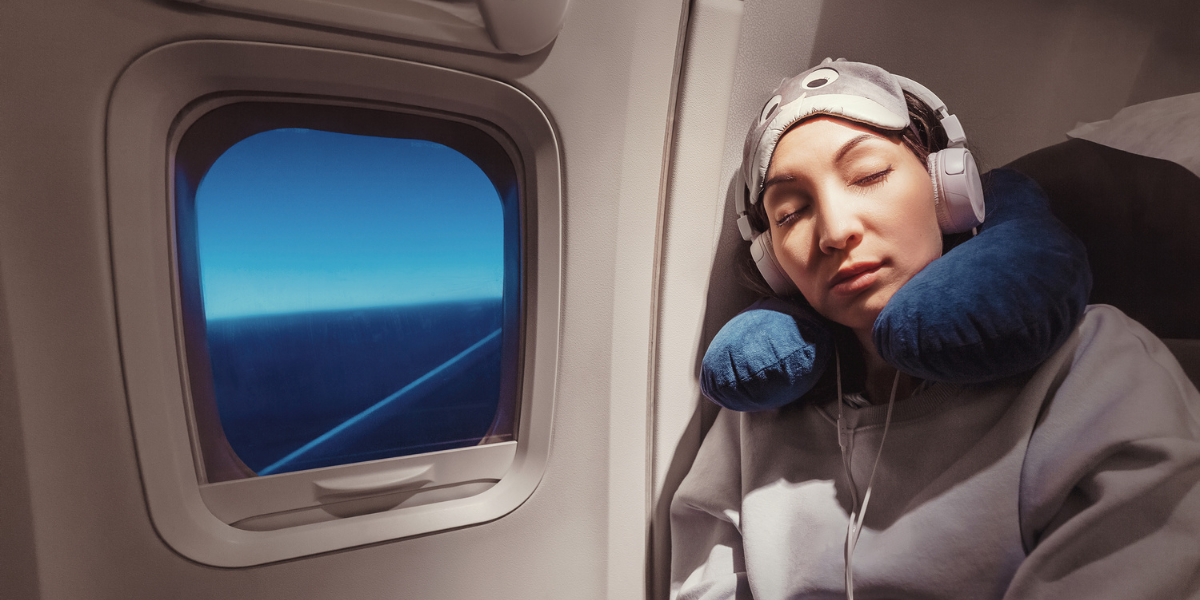
- Select a window seat: Gives you a wall to lean against and prevents seatmates from waking you.
- Avoid high-traffic areas: Skip seats near galleys and restrooms.
- Bring supporting sleep gear: A neck pillow, contoured eye mask, and noise-canceling headphones or earplugs.
- Dress in breathable layers: Cabin temperatures fluctuate soft layers and warm socks help.
- Skip late caffeine and alcohol: Water keeps you hydrated without disrupting your sleep cycle.
- Adjust your watch early: Set it to the destination time zone as soon as you board.
For travelers who want extra room to rest, looking into how to make airplane seats more comfortable, checking available airline amenities, or booking an upgraded seat can dramatically improve cabin comfort.
What to Pack for a Redeye Flight
Keep your overnight essentials inside your personal item beneath the seat in front of you so you don’t need to access the overhead bins during flight.
Ergonomic travel neck pillow
Light-blocking eye mask
Noise-canceling headphones or earplugs
Empty water bottle (fill after security)
High-protein light snack
Compact toothbrush and toothpaste
Refreshing facial wipes
Charging cable and airline-compliant power bank
Warm socks
Lightweight travel blanket or jacket
Always verify your airline’s rules on power banks and lithium batteries before packing them in carry-on luggage.
How to Book a Redeye Flight Smartly
- Compare total travel costs: Factor in ground transportation at odd hours and early hotel check-in fees against the airfare savings.
- Review baggage policies: Make sure baggage fees don’t cancel out savings from a discounted overnight ticket.
- Reserve seats immediately: Secure a window seat toward the middle of the aircraft in advance.
- Plan arrival day transport: Confirm rental car desks or public trains will be open when you land at 5:30 AM.
Best US Routes Where Redeye Flights Are Common
Overnight flights are standard fixtures on cross-country itineraries across the United States. You can easily find nonstop overnight routes between major city pairs:
- West Coast departures to the East Coast — New York, Boston, and Washington, D.C. routes.
- West Coast connections into the Southeast — Miami and Orlando.
- Departures from hubs like Los Angeles or Las Vegas connecting eastward across the Midwest and South.
Redeye Flight vs. Daytime Flight
| Feature | Redeye Flight | Daytime Flight |
|---|---|---|
| Departure | Late night | Morning or afternoon |
| Arrival | Early next morning | Same day |
| Sleep | Harder | Not usually needed |
| Price | May be cheaper | Depends on demand |
| Best for | Saving time | Comfort and families |
Frequently Asked Questions
1. What is a redeye flight?
A red-eye flight is an overnight commercial flight that departs late in the evening and arrives early the following morning.
2. Why is it called a red-eye flight?
It earned the nickname because passengers frequently disembark in the morning with red, irritated eyes from trying to rest in transit.
3. What time do red-eye flights usually leave?
Most take off between 9:00 PM and 1:00 AM, landing at their destination between 5:00 AM and 8:00 AM.
4. Are red-eye flights cheaper?
They can be cheaper on specific routes where overnight demand is lower, though pricing ultimately depends on airline load, route, and season.
5. Are red-eye flights safe?
Yes. Red-eye flights operate under the same strict commercial safety, crew rest, and maintenance regulations as daytime flights.
6. Are red-eye flights good for families?
They can be challenging for families with infants or young children because irregular sleep hours often lead to overtiredness.
7. What is the best seat for a red-eye flight?
A window seat away from lavatories and galleys is best it gives you a headrest surface and prevents foot traffic interruptions.
8. What should I pack for a red-eye flight?
Bring an eye mask, neck pillow, earplugs, warm layers, an approved power bank, a water bottle, and basic grooming items like face wipes and a toothbrush.
9. What is the difference between a red-eye flight and an overnight layover?
A red-eye flight keeps you flying toward your destination overnight, while an overnight layover leaves you waiting inside an intermediate airport for several hours between flights.
Compare Red-Eye and Daytime Flights
Find the best balance of price, timing, and comfort for your next trip.
Compare Flights with TruAirfare →
Prefer to book by phone? Call TruAirfare 24/7 at (844) 744-6348
CALL US TOLL-FREE to get the best unpublished rate
Submit a request
What Is a Redeye Flight? Meaning, Pros & Tips
If you are planning an upcoming trip across the country,...
Can You Leave the Airport During a Layover? Rules & Tips
A six hour layover can feel like wasted time when...

Largest Music Festivals in the US: Dates, Tickets & Travel Guide
Music festivals are no longer just weekend concerts where you...

Closest Beaches to Dallas: Drive Times, Maps & Best Trips
Living in Dallas does not mean you have to skip...

Things to Do in Florida With Kids: Best Family Activities
Planning a trip with your loved ones can be deeply...



About Us
Truairfare.com is an online search portal for flights tickets where you can find a variety of accommodations near you or at your preferred location.
Get in Touch
Disclaimer:- We are resellers of travel products and services, including hotels, flight deals, car rentals, vacation packages, and attractions. We are a travel company with an online portal partnered with travel consolidators and third-party travel providers. We are not directly or indirectly associated with any airline, hotel, resort, or accommodation. All prices quoted through us include all taxes and fees. The hotel search engine used is a third-party tool from Travelpayouts, which is simply used to provide information; we are not associated with any company, accommodation, or property available on it.
